

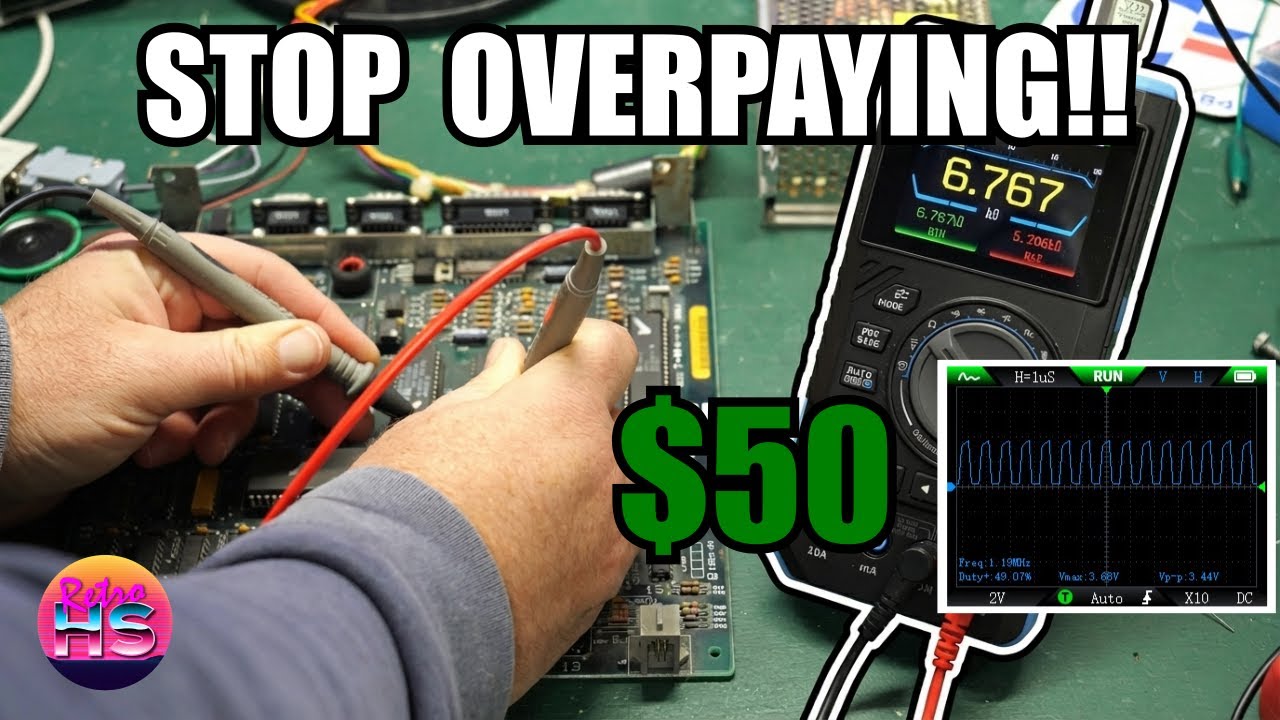
I took a look at a tool that landed right in that sweet spot retro computing tinkerers always chase: something cheap enough to justify buying, but capable enough to actually earn a place on the bench. In this video, I checked out the FNIRSI DST-210, a handheld combination device that packed a digital multimeter, a small oscilloscope, and a signal generator into one unit. That kind of all-in-one gadget always sounds a little too good to be true, especially for anyone used to juggling separate meters, scopes, and test gear while chasing faults in old computers and peripherals. What made this one interesting was that it wasn’t pretending to replace serious lab equipment, but it did look like it might be incredibly useful for quick diagnostics, field work, and budget-conscious retro repair.
Right at the start, I went over the look and feel of the unit and spent some time showing how it was put together. The DST-210 had a very handheld-instrument kind of design, with a color screen, rubberized protective shell, and controls that made it seem more substantial than a disposable gadget. I pointed out the general layout, the probe connections, and the way the interface was arranged for switching between meter and scope functions. For anyone doing retro computer work, that physical side matters more than it might seem, because gear like this tends to get moved around the bench, carried to storage shelves, and used in awkward positions while probing inside compact machines. I gave my impressions of the buttons, rotary selector, and overall usability, and the unit came across as something that was trying to be practical rather than flashy.

When I opened it up and showed what came in the box, I focused on the accessories and how complete the package felt for the price. The device came with the expected test leads for multimeter use, along with oscilloscope probes and charging or connection accessories depending on the kit. I walked through the included items and talked about whether they looked like throwaway extras or things you could actually put to work. That matters because low-cost instruments often looked appealing until you realize the supplied probes or leads are poor enough that you immediately need replacements. In this case, the bundle at least appeared to give you what you need to get started with all three functions without having to place another order before doing any testing. For somebody just getting into bench repair, that made a difference, since it lowered the barrier to actually using the thing the same day it arrived.

Once I got into the specifications and digital multimeter functions, I spent more time digging into what the device claimed to do and how realistic those claims seemed. I covered the basic meter capabilities and showed the usual measurement modes you’d expect, including voltage, resistance, continuity, and related functions that mattered constantly in retro repair. I navigated through the interface and demonstrated how the meter side of the device behaved in actual use rather than just reading a spec sheet. That included looking at responsiveness, readability, and whether it felt trustworthy enough for the kind of work most of us did on vintage boards, power supplies, and cables. In retro computing, you often don’t need an ultra-premium bench meter just to confirm a 5-volt rail, check whether a fuse has opened, or trace a broken connection across a keyboard matrix. I talked through that practical angle and showed that the meter side of the DST-210 seemed positioned more as a convenient everyday diagnostic tool than as a precision reference instrument. The key question wasn’t whether it beat a dedicated Fluke or a full bench setup, but whether it was good enough to save time while troubleshooting old hardware, and that was the lens I used throughout the video.

The oscilloscope portion was where the combo concept either succeeded or fell apart, so I spent time showing what the scope mode actually looked like in operation. I switched over from the meter functions and demonstrated the waveform display, controls, and general handling of the scope interface. With compact gear like this, the biggest concern is usually whether the screen and controls made it usable enough to catch real faults rather than just technically displaying a signal. I showed how the trace appeared, how settings could be adjusted, and what sort of signal observation you could realistically expect from a handheld instrument in this price range. For retro computer work, a small scope can still be hugely valuable even if it isn’t a high-end lab unit, because being able to see clocks, reset lines, audio activity, or suspicious noise on power rails often tells you far more than a multimeter ever could. I framed it in that practical troubleshooting context and discussed how the scope function might fit into actual repair tasks on vintage machines. I also referenced the 2C53T two-channel scope in the description as another budget-friendly option, which helped place the DST-210 in the wider category of affordable test gear rather than treating it like the only answer.

After that, I moved on to the signal generator, which was probably the most “bonus feature” part of the package but still potentially useful. I demonstrated the generator mode and showed how the unit could output test signals, which could come in handy for injecting audio, checking response paths, or doing simple signal tracing and experimentation. On a retro bench, a built-in generator isn’t something everybody needs every day, but when you need one, having it already built into the same handheld device can save a lot of hassle. I went through the interface enough to show how approachable it was and what kind of role it could play in diagnosing or verifying behavior in circuits. It wasn’t presented as a substitute for specialized standalone gear, but more as another practical tool in the box, especially for hobbyists who don’t want to dedicate money and space to a separate generator they might only use occasionally.

By the time I got to the pros and cons, I had a pretty clear picture of where this device made sense and where its compromises showed through. On the positive side, I liked the sheer convenience of having three common bench functions rolled into one portable unit, and I thought the price made it especially attractive for beginners or anyone who needed a secondary tool they could grab quickly. It seemed well suited to basic troubleshooting, quick checks, and situations where dragging out multiple instruments just wasn’t worth it. On the downside, I made it clear that combo devices always involved tradeoffs, and this one wasn’t going to replace dedicated equipment if you needed top-tier accuracy, advanced oscilloscope capability, or the best possible ergonomics. The small screen, compact controls, and all-in-one design naturally impose limits. Still, for the target audience of retro tinkerers, electronics hobbyists, and repair folks on a budget, those compromises don’t necessarily kill the value. The real question is whether the convenience outweighed the limitations, and I thought for a lot of people it probably does.
The big takeaway was that the DST-210 looked like the kind of tool that could genuinely help on a retro computing bench without demanding a huge investment. It wasn’t miracle gear, and I didn’t treat it like it was, but it did seem to offer a lot of utility in a compact and affordable package. If you ever want a simple way to check voltages, probe a few signals, and generate a test waveform without buying three separate devices, this is a pretty compelling option to look at. If you want to see how it handled in real use and get a better sense of whether it fits your own repair style, the full video is worth watching.
— Aaron
Links
- DST-210 FNIRSI website
- DST-201 Amazon
- DST-201 FNIRSI website
- 2C53T Two Channel Scope Amazon
- RGBtoHDMI
- HIDman USB converter
- “Fakebit World” by Malmen
Timestamps
00:00 – Look And Feel
04:25 – What’s In The Box
06:54 – Specs And Digital Multimeter
14:14 – Oscilloscope
19:54 – Signal Generator
21:06 – Pros And Cons
Leave a Reply